A Visit to Princeton University
At the end of August, I came to New York for an academic conference. Despite the impressive name, it felt pretty shallow. I only had one day at the venue to present my paper, and spent the rest of the time sightseeing. It was my first time in the northeastern US, so naturally I hit all the New York attractions first. With one day left and nothing planned, I remembered there were two prestigious schools nearby — Columbia University and Princeton University — and planned to visit one. Considering Columbia has already been “played out” by Chinese due to Liu Qiangdong and Zhang Zetian, Wang Leehom, Yundi Li, etc., I opted for Princeton instead. Before this, all I knew about Princeton was that it was an Ivy League school and that Einstein taught there. Nothing else.
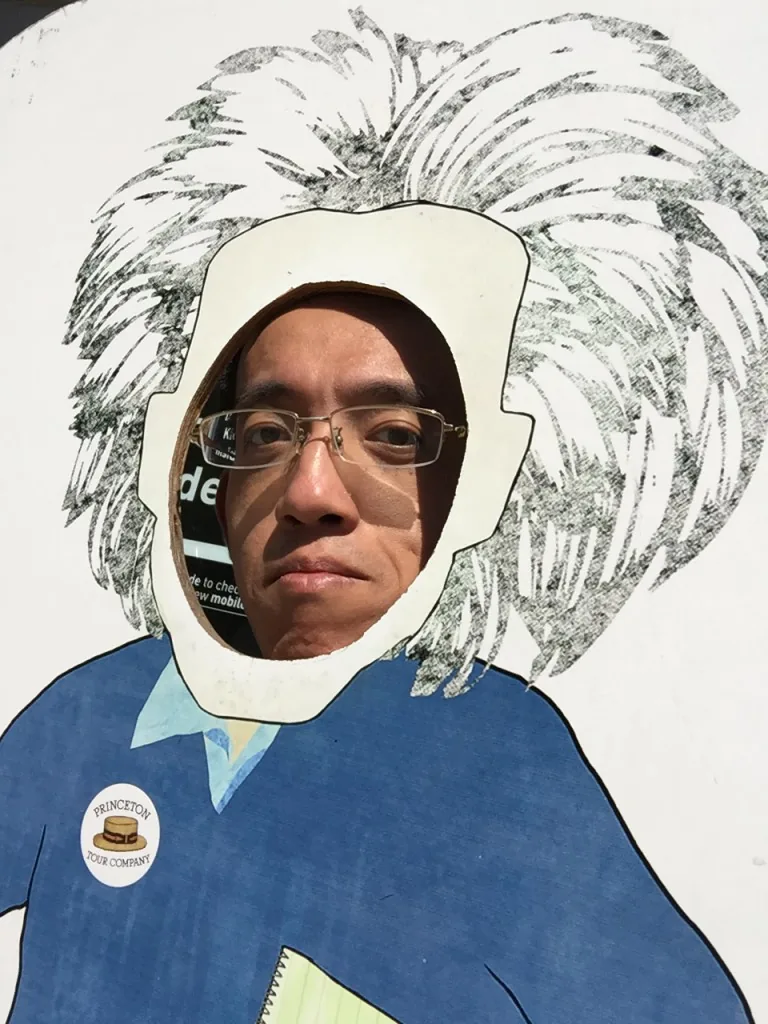
After returning, I felt this trip to Princeton was the biggest highlight of my entire US visit, bar none. So I opened my blog to write a long post.
Before writing, I need to set the tone. Honestly, a one-day visit can’t yield deep understanding — it’s all hearsay, barely scratching the surface. But even that scratch was震撼 enough. Also, I don’t want this to be a superficial travelogue; I hope to dig into something deeper. But since I work in education, I can’t help comparing with China’s situation. Given the current environment, unless I truly don’t want to stay in China, some things just can’t be said publicly. So I’ll try my best not to compare — I’ll leave that to the readers. Plus, when I went abroad to study, a leader earnestly told me: “Don’t talk about the good things about them; talk forcefully about the bad things.” In that spirit, I must thoroughly criticize capitalism. Alright, let’s begin. Three parts: travel, academics, life. If you just want the travelogue, read the first part only.
Travelogue
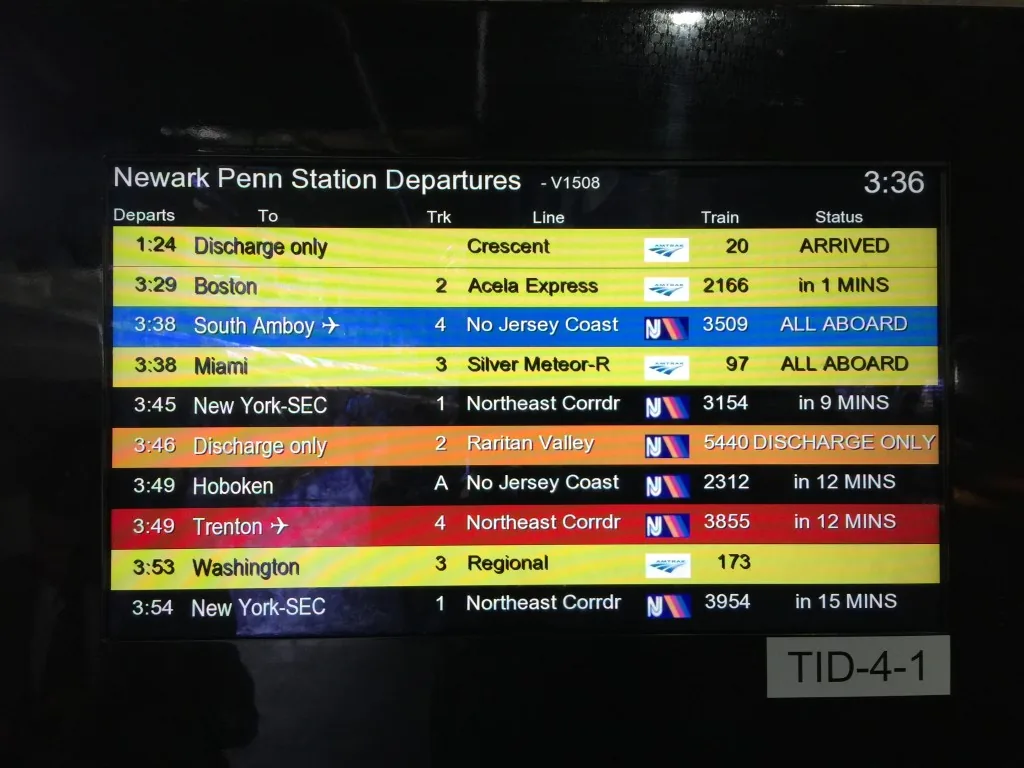
It takes 50 minutes by train from Newark Airport, where I was staying, to Princeton. About 40 km from New York. I have to complain about US trains — all run by private companies. I can tolerate not having a nationwide rail network, but the same tracks host trains from multiple companies — some fast, some slow — with non-transferable tickets. It’s easy to board the wrong one. Fortunately, the black ticket inspector told me I was on the wrong train, otherwise I’d have ended up in Philadelphia. There are rumors about opening up China’s railway operations to private companies — I imagine it’d look like this.
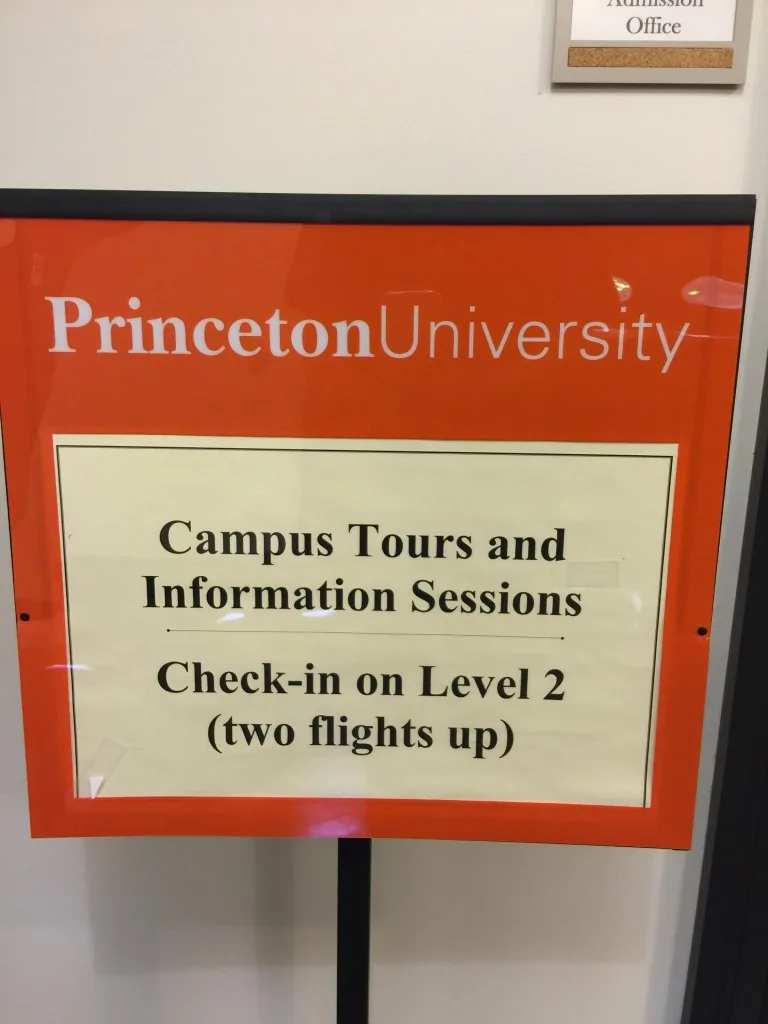
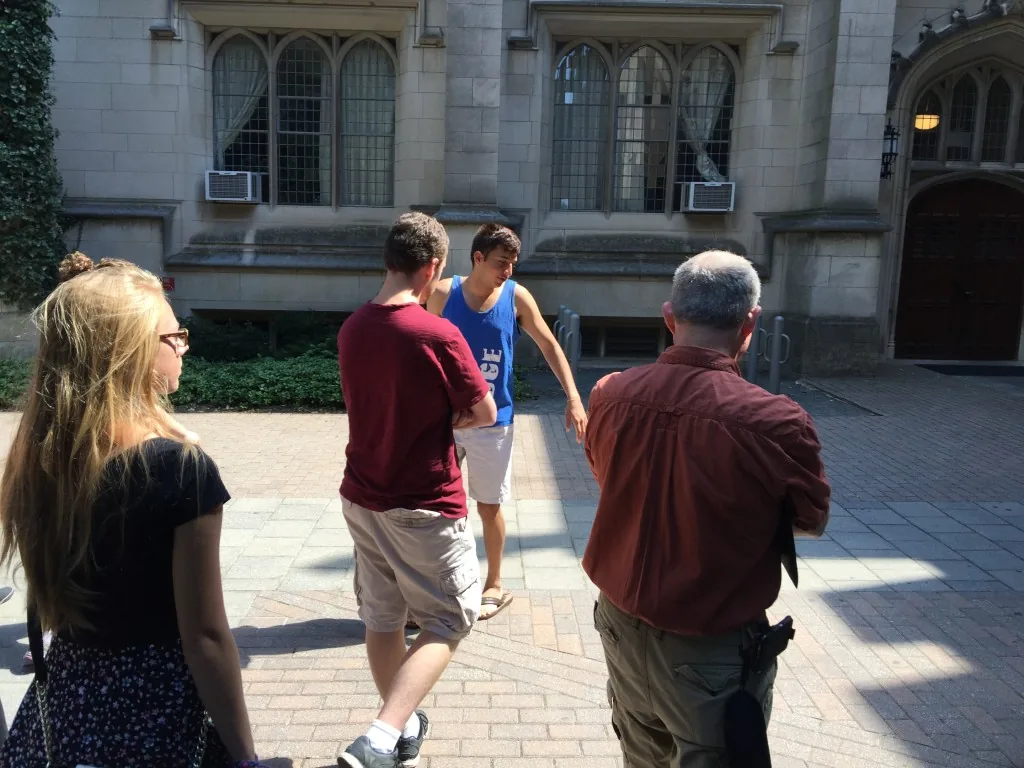
According to Princeton’s official website, they have a campus tour called Orange Key Tour. Not sure about the name origin. It’s free and aimed at high school students interested in applying to Princeton. Fortunately, foreigners have trouble telling Asians apart, so I blended in without issue. (Bonus: they have a virtual tour online at http://www.princeton.edu/~oktour/virtualtour/). The tour started at 11 AM. By the time I arrived, a crowd of students and parents had gathered. The guides were current students — not sure if work-study or volunteer. We were split into four groups. One guide said he studied chemistry and minored in computer science; the others studied literature and music — didn’t interest me. Naturally, I followed the engineering guy. The tour lasted an hour, covering a loop around campus. The guy shared his personal experiences, introducing academics and campus life. I highly recommend joining this tour if you visit Princeton — otherwise it’s just superficial sightseeing. He spoke quickly; I caught about 90%. So most of the following comes from his introduction, with some later fact-checking on my own.
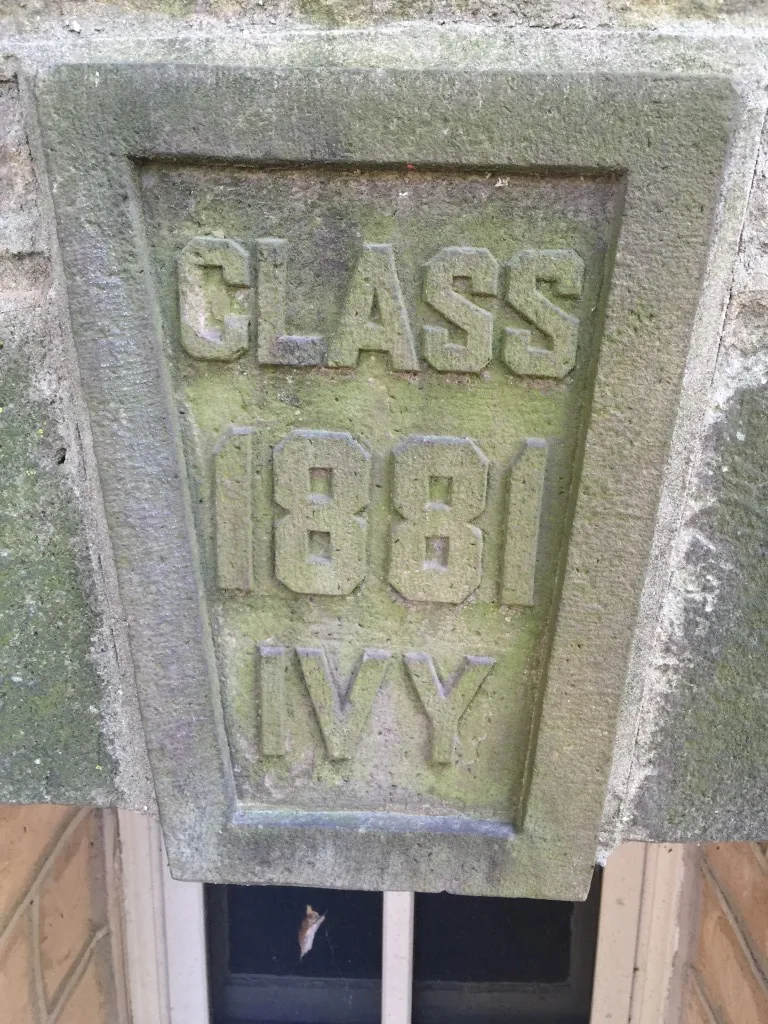
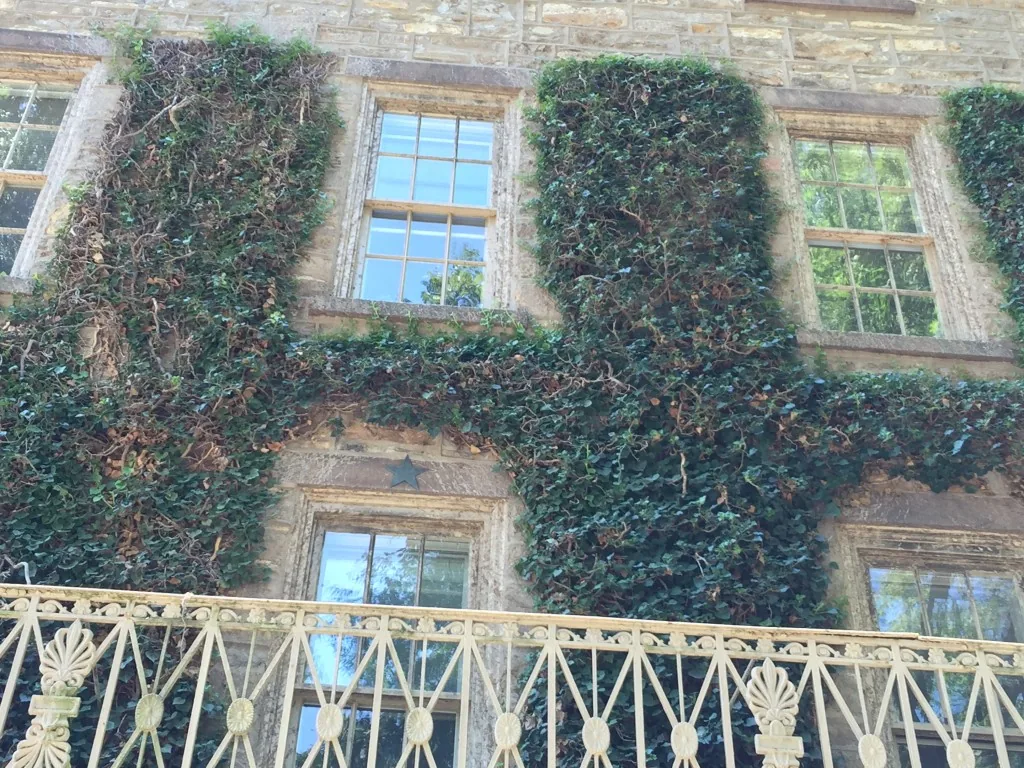
Princeton’s history doesn’t need much introduction — it’s older than the US itself, a colonial-era college. Nassau Hall is Princeton’s oldest building. When the school moved here in 1756, it was the only building — teaching, dormitories, and administration all crammed together. Graduates had a tradition of planting an ivy vine at the base of the building, letting it climb up. After decades, there was no space left for planting. Later, an engineer said ivy damaged the building, so they replaced the tradition with placing a graduation year plaque on the wall, still called “Ivy” even though no ivy is planted anymore.
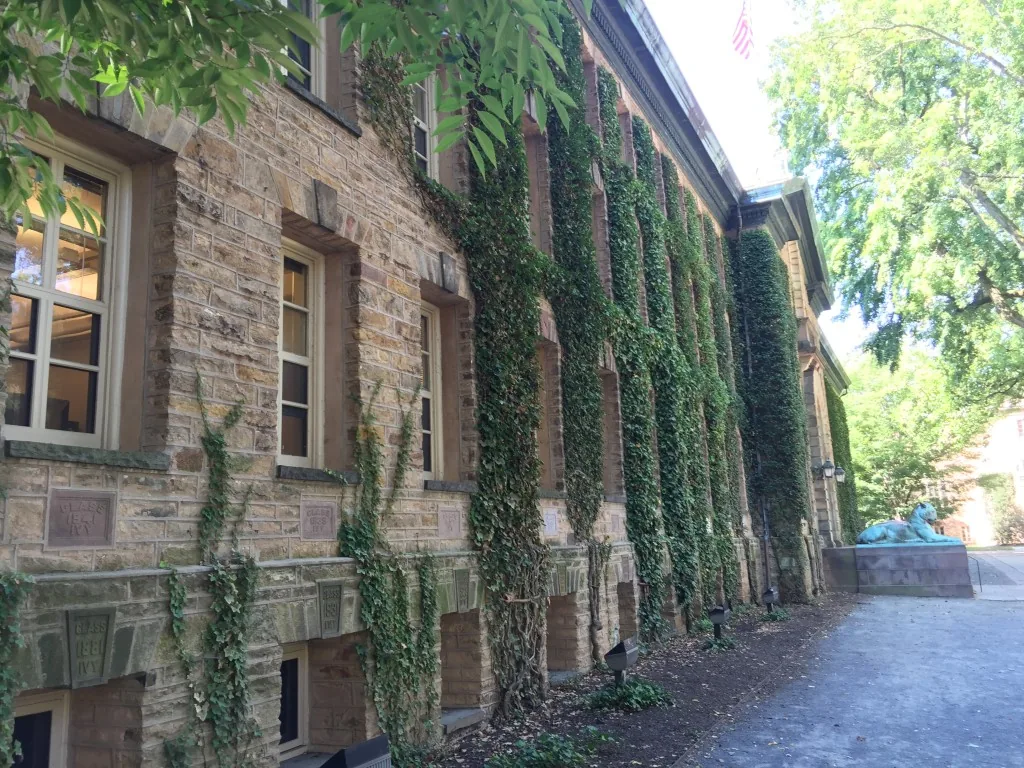
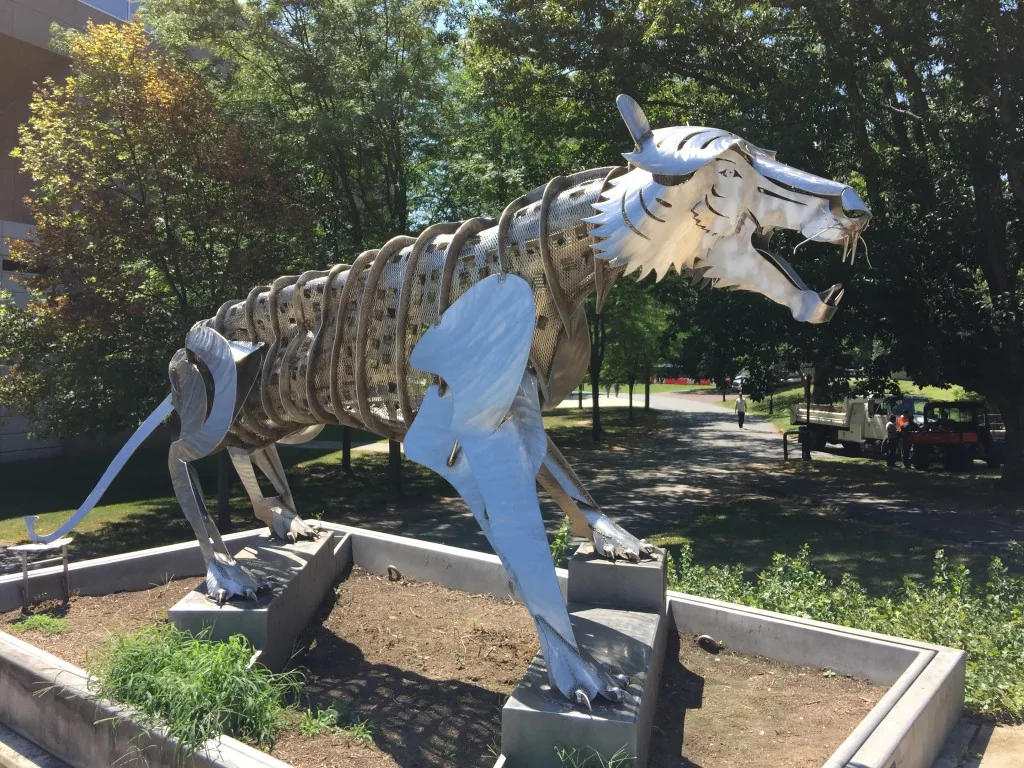
In front of the building are two tigers — the tiger is Princeton’s symbol. Tiger statues and logos are everywhere on campus. Many US universities have an animal mascot — UC Berkeley has a bear. I asked the guide why Princeton chose the tiger. He said orange is Princeton’s color, and the athletic uniforms are orange. When players fall in the rain and get muddy, the orange and black stripes look like tiger fur. Pretty interesting.
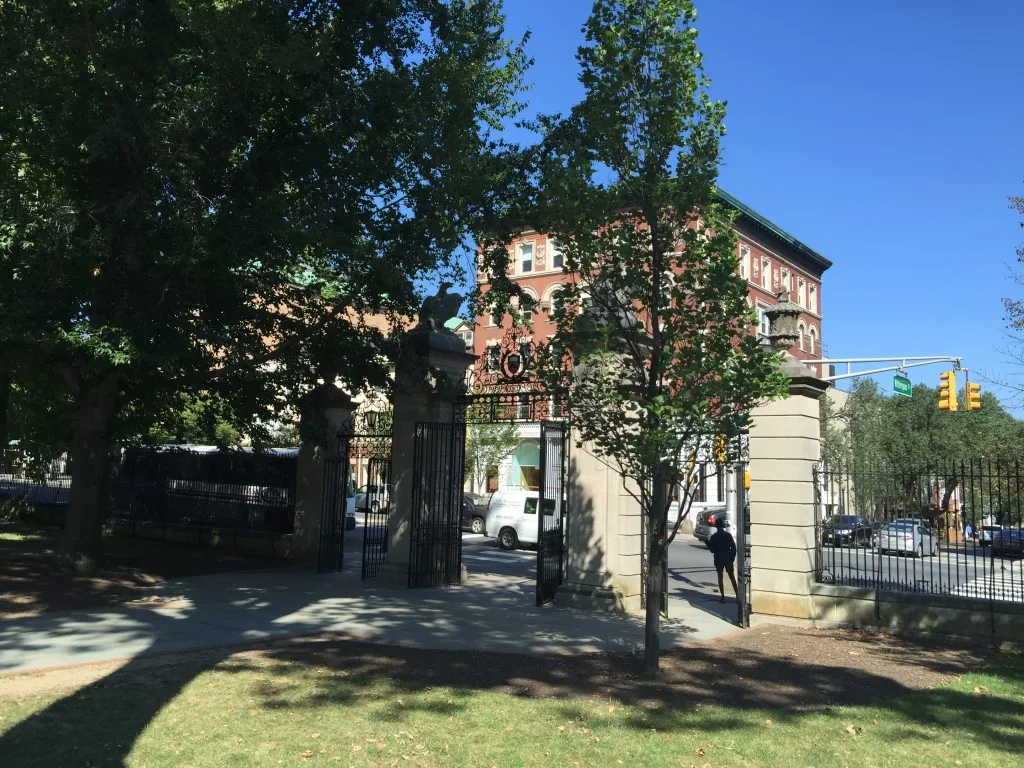
In front of Nassau Hall is a peculiar gate that seems to serve as the main entrance. This shabby gate, if placed in China, would be outclassed by third-rate universities. It’s so worn down that its reputation has to carry it. Apparently, Princeton students walk through this gate during their freshman orientation. Legend has it that if you walk out through this gate before graduation, you won’t graduate. But Princeton is surrounded by wilderness — all the food, drink, and entertainment is on Nassau Street outside this gate. So what do students do when they need to go out? They use side gates or the back gate. This capitalist university is teaching students to take shortcuts rather than the right path. Hong Kong Polytechnic University has a similar legend. PolyU doesn’t even have a gate — just a fountain serving as the entrance. Legend says if you get wet from the fountain before graduation, you won’t graduate. Both legends — one teaches backdoor dealings, the other teaches avoiding getting wet — quite different in moral value.
Many dormitory windows on campus have stars on them. According to the guide, these commemorate Princeton students who died in America’s wars. After they were killed, a star was placed outside their dorm window. There are quite a few such windows. It makes you think — Americans struggle to get into such prestigious schools, only to be sent to die in wars in Iraq and Afghanistan. Lucky for us in China — after passing the college entrance exam and completing military training, that counts as military service. At least we won’t die on a battlefield.
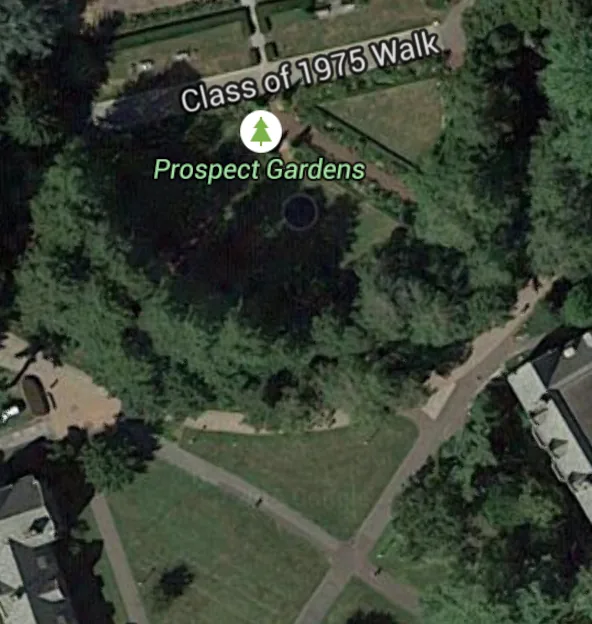
Prospect House was once known as Princeton’s White House — it was a villa assigned to university leadership. Later, apparently after studying thrift and integrity, leaders found their office space exceeded standards and vacated it, turning it into a faculty dining hall. There’s a garden in front that the guide claimed is shaped like Princeton’s coat of arms, visible from an airplane. I checked Google Maps — doesn’t look like it at all. Got fooled.
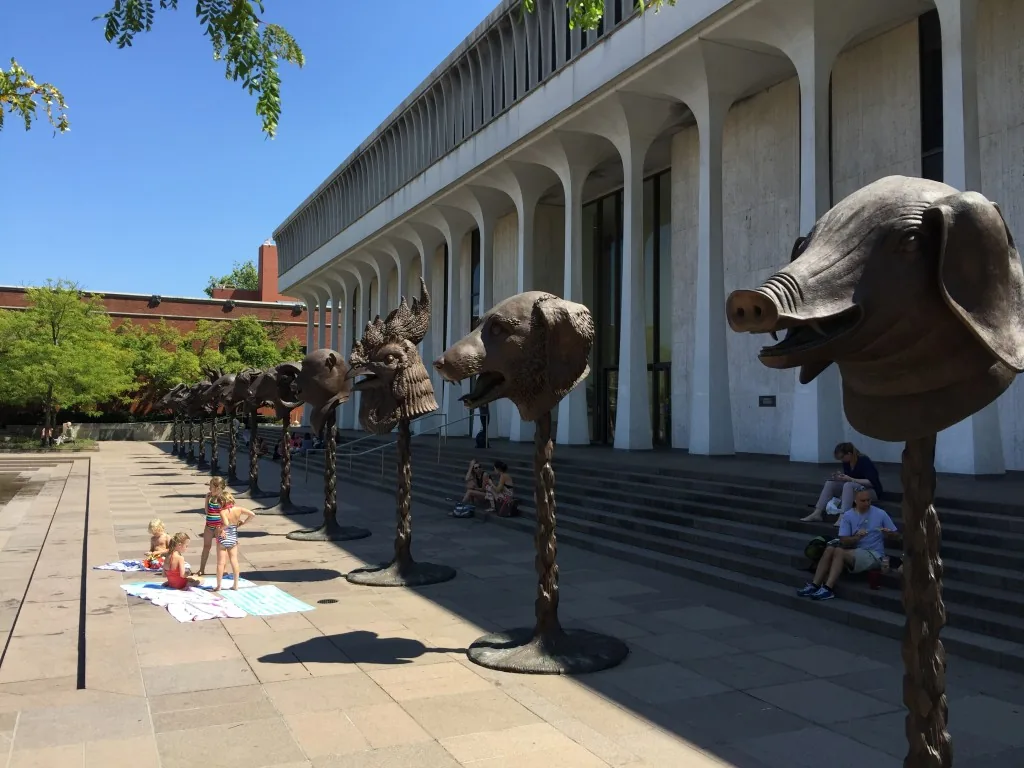
This is the School of Public and International Affairs, which trains civil servants and has produced several presidents. There’s a row of twelve zodiac animal statues at the entrance. Curious, I asked the guide: “We Chinese don’t believe in zodiac animals anymore — we believe in horoscopes now. Why do you still believe in this?” He said it’s the work of famous Chinese artist Ai Weiwei. As a Party member of firm conviction, I immediately covered my ears and entered immune mode. I have absolutely no idea who Ai Weiwei is or what he did.
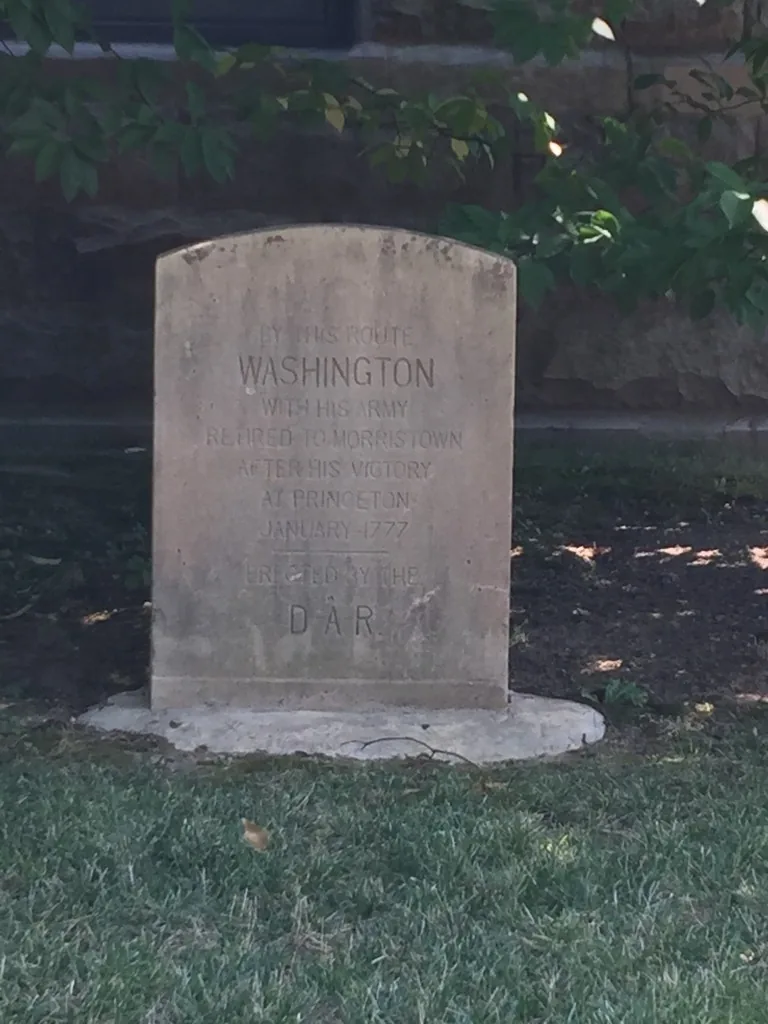
On campus, I also found traces of Washington — the American founding emperor. After the revolutionary war drove out the British invaders, this guy apparently influenced by ancient Chinese ethics, thought that after conquering the realm, he shouldn’t rule it, and insisted on retiring to civilian life. Little did he know that was just a Confucian ideal — no one in China has ever saved the people and then truly retired. He did retire for a while, though he later had a change of heart and came back to lead, even suppressing American peasant uprisings. This road was where he retreated back to his hometown after resigning as commander-in-chief of the Continental Army.
Princeton has many famous alumni. I won’t list them. The most famous is Einstein, though apparently he wasn’t a Princeton professor — he worked at a nearby research institute and only occasionally gave lectures at Princeton. The guide told me he once met John Nash (the game theory pioneer who received an honorary doctorate from Hong Kong Polytechnic University last year and died in a car accident a few months ago) on campus and rushed over for a selfie. He posted it on Facebook and got 500 likes.
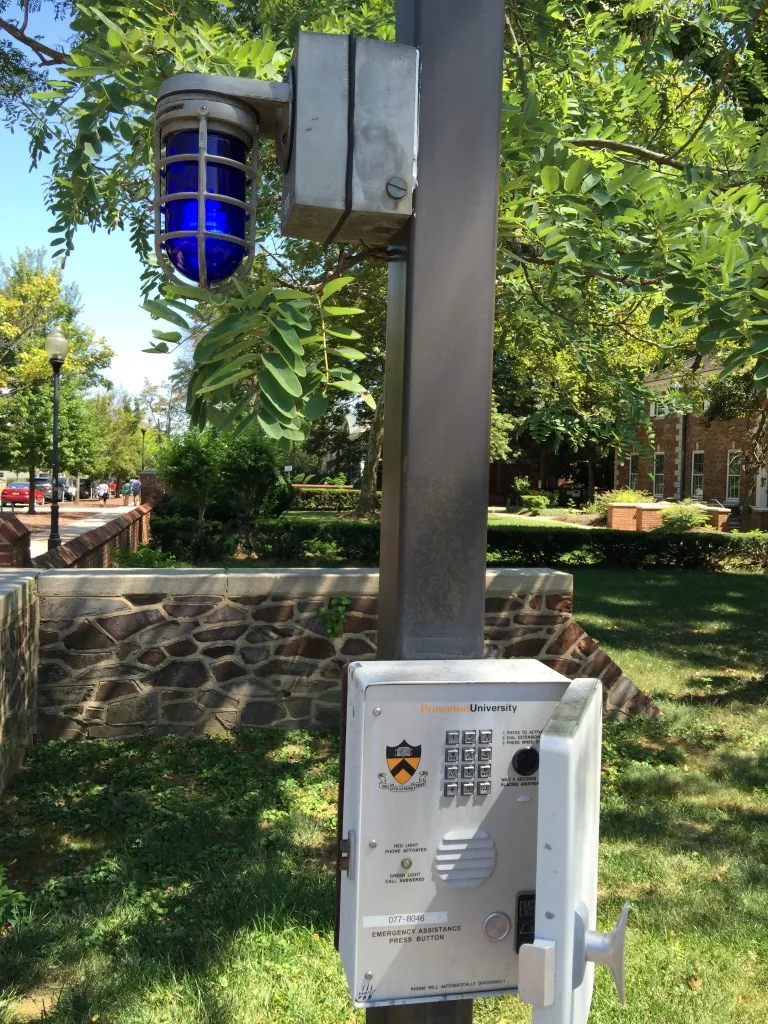
This blue light is Princeton’s emergency system. Whether you feel threatened, stressed, or attacked by a violent squirrel, just press the button and someone arrives within three minutes. Apparently Tongji University has something similar — I wonder if anyone has tested it.
Academics
The guide complained bitterly that the US Department of Education provides no leadership — there’s no national disciplinary目录, letting universities set their own degree programs. This results in chaos. For example, Princeton offers only two degrees: Bachelor of Art and Bachelor of Science and Engineering. Sounds reasonable — one is liberal arts, the other science. But specific majors are a mess. Chemistry, civil engineering, physics — typical STEM fields — are classified under BA. When he went to Beijing on exchange, people thought he was a liberal arts student. If not for Princeton’s reputation, they wouldn’t have accepted him.
As for Princeton’s undergraduate teaching features, the guide said the student-to-faculty ratio is incredibly low, about 6:1. Six students per professor. Academics are brutal — students spend most of their time in a half-dead state. Some can’t handle it, and the university, fearing students might jump off buildings and cause their parents to bring extended families to protest, came up with solutions like gap years or exchanges. The idea is: Princeton is too stressful, so spend a semester or year somewhere less demanding on earth — like Indonesia — and get credit for it. The guide himself went to Beijing for a semester and even picked up a Beijing girlfriend. A good deal.
With so many faculty and so few students, professors without teaching hours don’t get paid and can’t eat. What if they protest at city hall or even petition the central government? The school came up with another solution: discussion classes, or small-group teaching. One professor leads a few students, supposedly improving teaching quality. The guide said on nice days, you’d see small groups on the lawn — professors and students having discussion classes. I was astonished. That would never fly in China. First, if fewer than 15 students sign up for a course, it’s deemed underpopulated and canceled — go home. Second, arbitrarily changing the teaching venue to the lawn is a grade-one teaching accident. What if leaders drop by for an unannounced inspection and can’t find the class? Totally unacceptable. He pointed to a lawn and said it was Einstein’s favorite. Good thing Einstein never taught in China — I guarantee he’d get criticized within a semester and be fired within a year.
Finally, another Princeton特色: undergraduates must do research and write theses. Every undergrad gets a year, typically sophomore year, to choose a topic and work with a professor on research. There are requirements for papers and theses, which must be original and innovative. This is tough for them. The guide complained that most people don’t do research until master’s or PhD level — this is典型 premature development. “We just went through brutal college entrance exams, know nothing, and you want us to write publishable papers? That’s killer.” I showed him a photo from my phone — a ad on Tongji’s campus: “Undergrad thesis done for you, 3000 RMB. Bulk discounts available.” I asked him: “You don’t have this service? If not, that’s a huge market opportunity.” He just gave a wry smile.
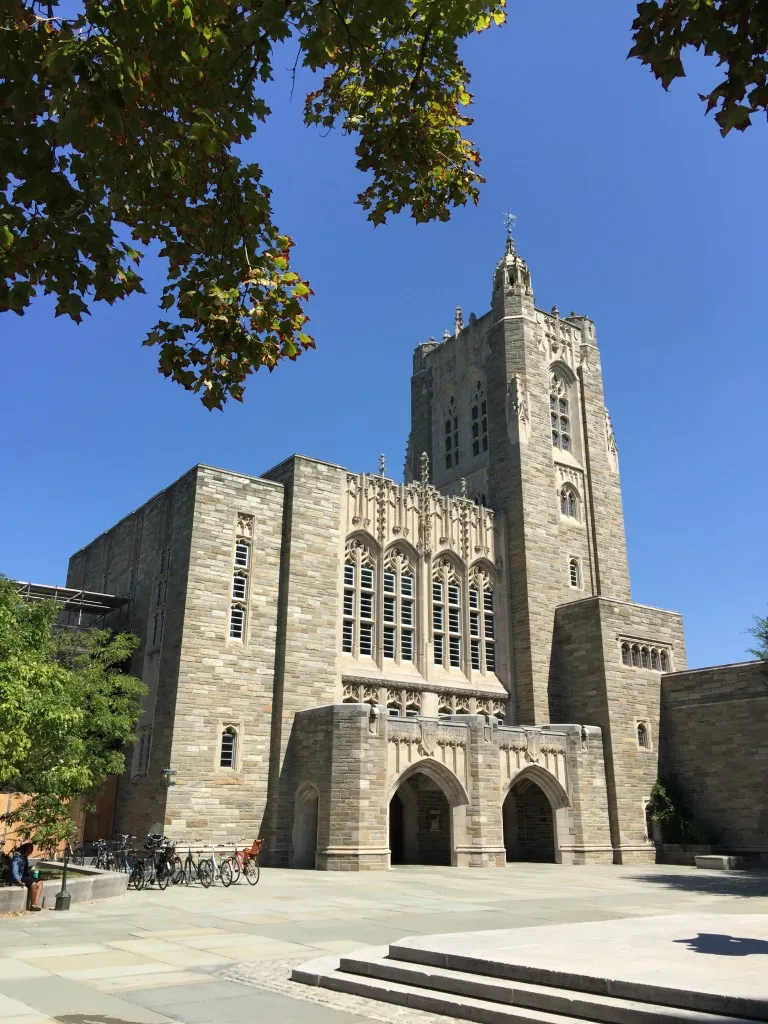
This is one of Princeton’s many libraries. US books are insanely expensive — a textbook costs over $200. Buying two or three textbooks costs as much as an iPad. I’m not sure why — some say it’s respect for knowledge, but I think it might be to keep the masses ignorant, preventing poor people from affording books and education, leaving them at the mercy of capitalists. Whatever the reason, unless your dad is Wang Jianlin or you’re Bo Guagua, students can only borrow textbooks from the library — first come, first served. But with too many latecomers, the school devised another solution: inter-library loans with other universities. After grabbing all of Princeton’s copies, students can grab from other schools. The school handles shipping.
Campus Life
Princeton students are divided into six residential colleges. What’s a residential college? The guide said they’re basically like the houses in Harry Potter. Students from each college eat and live together, each with its own character. But there’s no sorting hat — freshmen are randomly assigned. He was assigned to Rockefeller College, named after the American tycoon. Capitalists will do anything for money. In China, when Tsinghua put the “Jeanswest” name on a building, public pressure forced them to remove it — universities shouldn’t be too commercial. We must never follow the US model here, or China would be covered with “Li Xiaolin Building” and “Wang Sicong Dormitory.”
After random college assignment comes room assignment. In China, room assignment is always problematic — letting advisors decide risks offending people and breeds corruption. Online selection means good rooms get snapped up by students who can code. How does Princeton assign rooms? They use — psychological testing! Like those online quizzes where picking a woman’s silhouette or a food item reveals your psychological and physiological orientation across eighteen generations. Everyone takes a test, and based on the results, they get assigned anything from a single to a 12-person room. No appeals allowed. The guide got a 4-person room and lived there for two years. Only upperclassmen are allowed to move out and rent apartments.
As for food, each college supposedly provides free meals, each with its own特色. But free food is free food. Plus Americans are incredibly picky — those who don’t eat meat call themselves vegetarians; those who don’t eat meat but eat fish call themselves pescatarians; those who don’t eat meat but eat eggs call themselves egg-vegetarians; those who don’t eat meat but drink milk call themselves lacto-vegetarians. Hard to satisfy everyone. So students created their own organizations — food clubs. Basically, several people take turns cooking. For example, a club of seven people, each person cooks one day a week.
At the end of the tour, someone asked why he applied to Princeton. He said he actually didn’t want to — but he’s from New Jersey, and his mother didn’t want him to go far. She wanted her precious son under her watchful eye. So he picked Princeton, just a 25-minute drive from home. (At this point, a passing auntie in the crowd applauded and screamed, “What a good son! I wish my son were as obedient as you. My unfilial son disappeared after turning 18 — sometimes I don’t hear from him for months or even years.”)
Someone also asked what impressed him most about Princeton. As he’s about to graduate after four years, looking back, he told us the biggest thing, the most important thing, is the people. The people he met, the friends he made, the experiences he had. He said if you take away the people from Princeton, no matter how beautiful the campus or how impressive the buildings, it’s just an empty shell. I’m sure that’s the official standard answer — propaganda. What’s so important about people? China has over a billion of them. If you think people are important, we’ll ship a few hundred million over. People are the least important thing. Chairman Mao said you can sacrifice hundreds of millions in a nuclear war. If they die, just have more babies.
————————–
Afterword:
While the article is mostly sarcastic, the content is based on facts. The nuances — those who understand will understand.