First Impressions of New Zealand #3: Local Customs
The tips from the first two articles came to nearly 500 RMB. Totally unexpected. Should I switch careers and become a professional online writer?
Local customs are hard to write about. I think truly understanding a place’s customs takes at least three to five years. A few years from now, I might be able to write a proper article about them. So consider this a supplement to the first two articles — things I wanted to say but didn’t. No particular structure; I’ll write whatever comes to mind.
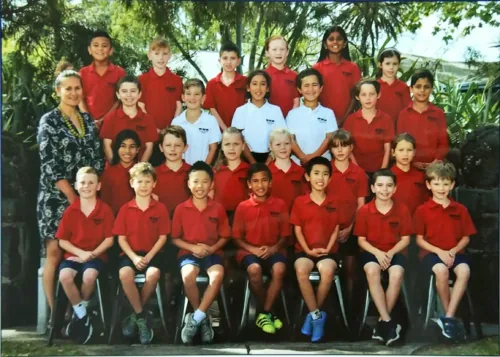
When we were kids, we were taught that China is a unified multi-ethnic nation, 56 ethnic groups, 56 flowers. But all 56 flowers are the same yellow colour. New Zealand? White, black, yellow, brown — all colours. That’s the feature of a classic immigrant country. The ratio of European descendants, Māori and Pacific Islanders, and Asians is about 7:2:1. Among Asians, Indians and Chinese are the most numerous, with perhaps slightly more Indians. But Chinese love clustering in big cities — in Auckland alone, Chinese might be 20% of the population. In some programs at the University of Auckland, half the students are Chinese. This class photo of Qian’s basically reflects New Zealand’s ethnic makeup.
I’ve met immigrants from all over the world — refugees from Somalia, Palestinians fleeing war, Americans disappointed with Trump, Northern Europeans fed up with cold weather. Yet despite their different origins, backgrounds, and languages, people here get along remarkably well. To be honest, there are only two places that have left me with the impression that people are genuinely friendly: New Zealand and Taiwan. How can I tell? A few small examples.
The customs officers at the airport are the first people you encounter. Compare: US customs will put you in a device, hands up, 360-degree scan. Schengen border officers will interrogate you about your ancestors. Hong Kong customs will say “this photo doesn’t look like you, come fingerprint with me.” New Zealand? The first time I came, they just asked if it was my first visit. I said yes. Then they warmly said “Welcome to New Zealand” and waved me through. This is the only place where a customs officer has ever welcomed me.
On New Zealand buses, people say hello to the driver when boarding and thank you when getting off. I’ve never seen this anywhere else. When walking on the street, strangers greet each other. Of course, that might be because there are so few people. With China’s population density, greeting everyone would be exhausting.
Maybe Gao Xiaosong is right about geographic determinism. When the sun never set on the British Empire and they sent emigrants around the world, the martial went to America, the pretentious went to India, and the convicts went to Australia. The earliest British immigrants to New Zealand were simple, honest, lower-middle-class folk who wanted to earn an honest living with their own hands. That’s why they didn’t massacre the native Māori on a large scale — instead, they signed a treaty and lived in harmony, which is rare in world history. Their way of treating people influenced later immigrants, gradually shaping the country’s character.
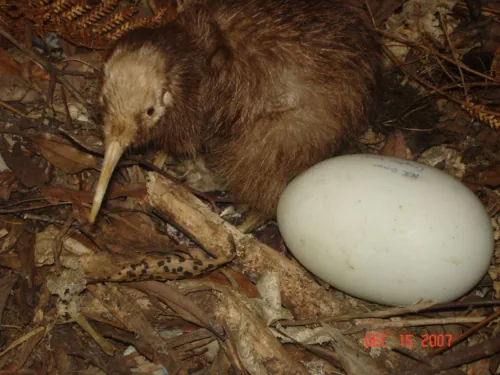
Kiwis call themselves after the kiwi bird. The kiwi is a flightless, slow-moving bird that lays enormous eggs — almost filling its entire body. It survives only because New Zealand has no native land mammals, so it has no natural predators. That’s how this simple, sweet bird survives. Kiwifruit is also called kiwi.
Just like the kiwi’s slow movements, life in New Zealand moves at a leisurely pace. Take healthcare: it’s free, but you have to register with a family doctor. I registered as soon as I arrived, and it took three months to take effect. Seeing a doctor is free, but you queue. For chronic conditions, a month is considered fast. Getting a bank card takes ten days to arrive by mail. Applying for a tax number takes half a month to activate. A driver’s license is fast — only a week. Everything is slow.
Trust between people is strong — people tend to believe what you say. I’ve always thought that professions like doctors and teachers are hard in China because of a lack of trust. If you think everyone’s trying to scam you, you’re in trouble. I know a guy here who borrowed a library book and lost it. He told the librarian he’d returned it, and without a second thought, the librarian cleared it from his record. Then he found it under his bed a few days later. Returning it was incredibly awkward.
Equality is a concept that the immigrant orientation teacher emphasised heavily. New Zealand takes equality very seriously. A few examples: America is still debating who will be the first female president. New Zealand women already hold every important position in the country. The head of state is the Queen. Since she resides in London and can’t govern overseas colonies, she appoints governors-general — in Hong Kong they were called governors; in our kiwi country, maybe “Christ”? Anyway, the governor-general is also female. The real power sits with the Prime Minister, and New Zealand had a female PM in the last century. The highest-ranking Chinese-New Zealander in government was also a woman, reaching minister level — though she resigned a few years ago over corruption allegations. Americans love saying “sir” — “sir” this and “sir” that. But our orientation teacher said “sir” and “madam” aren’t used in New Zealand. They don’t align with the principle of equality. Also, domestic flights don’t have first class or business class. Everyone’s the same. Unless you’re rich enough to buy a private plane.
Another reflection of equality is the narrow wealth gap. In China, incomes can differ by tens of times. A factory worker earning 2,000 a month is normal, but so is someone earning 20,000–30,000. In New Zealand, as long as you have a job, income is fairly similar. There’s no such thing as a particularly dignified or undignified job. A university professor might earn less than a construction worker. I met a Chinese professor of architecture who complained that teaching pays so little he’d join a construction crew for decoration work — if he weren’t worried about losing face with his parents’ relatives.
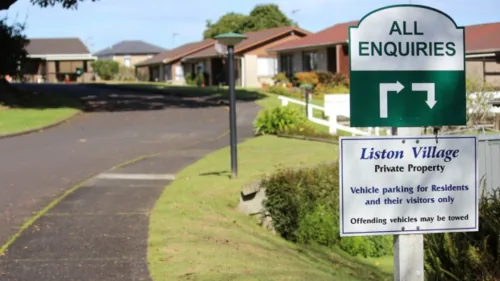
Near where I live, there’s a several-square-kilometre park with endless green grass, originally a hunting ground for early settlers. Beside it is a small community called Liston Village. Every time we walk past, we say, “Wow, this upscale neighbourhood is amazing. If only our home could be in this village, with this endless lawn — what more could we want?” Then I searched online and was shocked to find it’s a low-income retirement village built in the 1980s. My world view was shattered. In China, you can tell a mansion from a hovel at a glance. Here, you can’t tell at all.
The reasons behind this: first, the minimum wage is high. Working at McDonald’s can provide a decent life — which is almost impossible in most countries. Second, taxes are high. Third, social welfare is generous. Healthcare is free, and the government gives out money at the drop of a hat. The biggest slice of tax revenue goes back to the people, which is a roundabout way of narrowing the wealth gap. Whether high or low taxes, minimum wages, and welfare are better is a debate among economists. But the effect of all three being high is obvious: people’s cars, houses, clothes, and food are all similar — you can’t tell the rich from the poor.
But this narrow wealth gap and lack of class distinction have a downside: the whole society lacks ambition and drive. Individuals aren’t materialistic, and the country doesn’t develop. America is materialistic, China is materialistic — that’s why their GDPs are number one and two. Facts don’t lie.
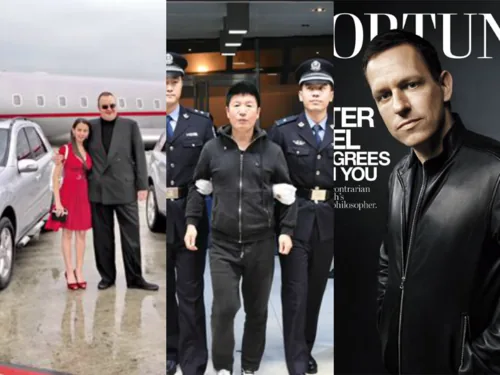
In China, the news is full of local tycoons — Ma Yun, Ma Huateng, Wang Jianlin, Wang Sicong — inspiring people to keep striving. In New Zealand, after all my searching, the media’s favourite “billionaires” boil down to three: Peter Thiel, the Silicon Valley bigwig and PayPal founder who took NZ citizenship; Kim Dotcom, the portly German-born Hong Kong-based founder of Megaupload; and Yan Yongming, China’s “most wanted” fifth fugitive, the “father of Chinese Viagra.” Yan voluntarily returned to China to confess and was widely reported — only to be allowed back to Auckland afterward. The power of role models is infinite, and New Zealand’s top three “billionaires” include not a single native-born Kiwi, making people feel that no matter how hard you try as a New Zealander, it’s pointless. So they just don’t bother.
Wealth disparity is like water — differences in height create potential energy. No difference at all, and you get stagnant water. Too much difference, and you get flooding. Moderation is key. A small wealth gap makes it easy to lose motivation. On weekends, just find a park and lounge around. Ambition, hard work — you gradually stop thinking about them. Because the country is so relaxed, many ambitious young people head to Australia, Europe, or America to make their mark. Without new immigrants to replenish the population, the whole country — already small — could end up with negative growth. That’s why immigration policy is relatively relaxed.

So how does this country qualify as developed? I think it’s mainly resources. Good land, good climate, far from wars and international disputes, barely any international presence. Just scratch the earth a bit and you have enough. New Zealand and China are opposites: China has an impressive total GDP but a sad per-capita figure. New Zealand has a sad total but an impressive per-capita figure. Even though they top various rankings all the time.
Finally, the difference from Australia. New Zealand has such low visibility that many people can’t tell it from its neighbour Australia. Honestly, I couldn’t either before I came. Now I know — the differences are significant. New Zealand and Australia are separated by 1,600 km of the Tasman Sea — three times the distance between China and Japan. New Zealand has no kangaroos, no koalas, not even any native land mammals. No A2 milk powder or UGGs either — those are Australian specialties. The accents are quite different too. Australian English features “today” sounding like “to die.” New Zealand English pronounces every “e” as “i” — “ten” becomes “tin,” “pen” becomes “pin.” One of Qian’s classmates is named Emma — instead of “Eh-ma,” everyone calls her “Ih-ma.”
This article is full of my own impressions, which may not be accurate. They might be shallow — after all, I’ve only lived here three months. I’ll stop here. I’ve been writing for several days and I’m tired. Time for a break. Next time, maybe I’ll write about work anecdotes and the New Zealand IT market. See you.