Qian's Education Journey #1
Preface
Three months after arriving in New Zealand, we had our first parent-teacher meeting. My wife and I sat upright in the classroom at Three Kings School, listening attentively as the teacher explained school matters. Meanwhile, several children were running and laughing loudly outside. Eventually the teacher had to go out and quiet them down. When she returned, she looked at us and smiled helplessly, shaking her head. I wondered — why look at us? Could it be… that Qian was one of those running around? When the teacher confirmed it, instead of feeling embarrassed, I felt immensely relieved. It was as if a weight had been lifted.
To be honest, before coming to New Zealand, my biggest worry was whether Qian would adapt. Back in China, he was quite an introverted child — didn’t like interacting with classmates, preferred staying home. Here, he couldn’t even speak the language. I worried he’d become even more withdrawn. Learning that he could run and play with other kids — even if at the wrong time — completely dispelled my concerns.
Before we knew it, Qian’s first year of school in New Zealand was over. He’s now started a long summer break of over a month. This article sums up his educational journey so far.
New Zealand’s basic education is vastly different from China’s. Objectively, it’s hard to say which is better, because you first have to define “good” and “bad.” And those definitions might differ for everyone, every group, every generation. Moreover, what environment suits your specific circumstances varies from person to person. So this article may contain my own views, but I won’t try to judge which system is better.
Enrolment
New Zealand children start primary school at age 5, for 6 years — Year 1 to Year 6. Qian had finished half of Year 2 in China. Here, he was placed straight into Year 4. That’s two grades up — one because NZ starts a year earlier, and another because the NZ school year begins in February.
There are state schools and private schools. I’m told private schools are quite intense and strict, but since we go to a state school, I won’t comment on those I don’t know about.
State school enrolment, like in China, is based on school zones. And it’s a classic case of “rental rights equal ownership rights” — whether you rent or own, as long as you live in the zone, you can attend. You just need to provide proof of residence — typically a letter with your name and address. Nobody checks. It’s all on trust. Honestly, it’s pretty easy. By Chinese logic, wouldn’t everyone just send their kids to the best schools?
Why isn’t there a mad rush for the best schools? I think there are several reasons. In over 90% of NZ, the population is sparse. Like a Chinese county seat, most towns have only one primary school — take it or leave it. In big cities like Auckland, you might have a choice, but there’s no authoritative ranking from either the government or the public. Chinese people are superstitious about the government’s decile ratings. But our immigrant orientation stressed — and the government has repeatedly emphasised — that decile is not a school quality rating. It’s a socio-economic rating of the neighbourhood. For a more objective view, you should check the school’s Education Review Office report. These reports are thorough and objective, but they don’t rank schools either. Decile scores are more straightforward — from 1 to 10 — fitting the Chinese preference for simple, quantitative judgements.
Decile is essentially an income index for the school zone residents. 10 means wealthy area, 1 means poor area. It doesn’t reflect teaching quality, staffing, or facilities. As I’ve said before, NZ’s wealth gap is small — decile 10 doesn’t mean 10 times the wealth of decile 1. Also, those who actively choose schools tend to come from education-focused regions. Westerners seem more go-with-the-flow. Actively choosing schools can backfire. For instance, in a certain Chinese-concentrated area on Auckland’s North Shore, property prices have been driven sky-high by Chinese buyers, earning the local school a decile 9 “wealthy area” rating. This year, the proportion of Chinese students in Year 1 exceeded 60%. After class, they all speak Mandarin — it’s become a Chinese primary school overnight. The principal was shocked. This made the news. But if you read that school’s 2016 ERO report, you’d find several items needing urgent improvement. So much for the decile superstition.
Another peculiar thing about NZ: foreign students can start from primary school. The country issues student visas for primary schoolers and accompanying visas for parents. No TOEFL, IELTS, or GRE required — just money. Qian’s school has three foreign students. Of course, tuition isn’t cheap — suitable for the wealthy.
Costs
Like China, state education is free. But free doesn’t mean completely cost-free. Over the year, our main expenses were:
The biggest expense: uniforms. The school requires uniforms, and they’re only available at one designated store near the school. And they’re not cheap — a full set costs about 2,000–3,000 RMB. Naturally, we wondered if someone was getting kickbacks. I checked their website and found there IS a kickback to the school — 10%, clearly stated. I wonder if making backroom deals transparent makes them legal. Imagine if China did the same — interesting.

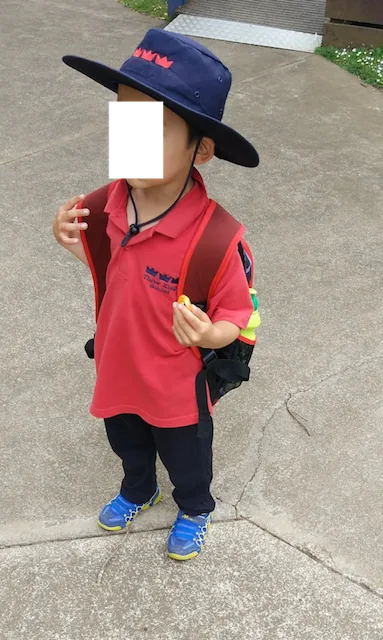
Because uniforms are expensive and kids grow fast, replacing them every year is a significant expense for many families. So parents get creative. For example, you often see two brothers at the same school sharing one uniform — the elder sister wears the long-sleeved top, the younger brother wears the short-sleeved version; sister wears long pants, brother wears shorts. In China, uniforms are typically three sizes too big. Here, kids often wear uniforms five sizes too big — Year 1 kids buying for Year 6 proportions, worn so long the colour fades. Also, counterfeit versions exist. The top has a logo that can’t be faked, but the pants don’t, so many counterfeit uniform pants circulate at a third of the price. The kid in this photo is a typical NZ student — uniform five sizes too big, counterfeit pants.
The second expense is donations. The school asks parents for donations — several thousand RMB a year. I’m told this is optional — you can just not pay. But in our way of thinking, after reading that article about “there are a hundred ways a teacher can ruin a student’s future,” who dares not donate? The upside: donations are tax-deductible, and since NZ taxes are high, you can get about a third back from the tax department.
The “Three Nothings” School
New Zealand has four terms per year, with two-week breaks between terms, and a 6-week summer break after the final term. Total school days are similar to China. Daily schedule: 9 AM to 3 PM — two hours less than China. And after 3 PM, the law doesn’t allow children to stay home alone. With no grandparents around, you often see groups of kids at the library using public computers to play games while waiting for their parents to finish work. Even though school starts at 9, Qian insists on arriving around 8:10 — just to play with classmates before class, usually football.
Compared to China’s structured approach, NZ primary education is basically “three absences” — actually, many absences: no specialist teachers, no timetable, no lunch, no assigned seats, no textbooks, no exams, and almost no homework. Specifically:
No specialist teachers: Unlike China with separate Chinese, maths, and other teachers. In NZ, possibly because of low population, each class has one teacher who teaches everything and stays with the students all day. The classic Chinese joke — “your Chinese was taught by your PE teacher” — happens daily here.
No timetable: According to Qian, mornings are for listening, speaking, reading, and writing. There’s a morning tea break, then maths, then lunch. After lunch, free activities. Afternoons are mostly singing, dancing, poetry, and games — not much real learning.
No assigned seats: They don’t even use desks much. They sit on the floor to listen to the teacher. Writing and drawing are often done lying on the floor. There’s no real classroom discipline. And there’s no “desk-mate” — in fact, classmates aren’t even fixed. At the end of each school year, the class is disbanded and reorganised the next year with new teachers and classmates. After a few years, everyone in your age group knows everyone.
No lunch: Since it’s an immigrant country, people from different cultural backgrounds have different customs. It’s hard to please everyone like a Chinese canteen serving potato stewed beef or braised pork chops that the whole class enjoys. Everyone brings their own lunch. We try to pack healthy food. But I later discovered kids have a barter economy. They get tired of their parents’ cooking and trade with each other. Two sushi rolls = one packet of chips. One piece of braised pork = two slices of cheese bread. Half a can of Coke = one apple. We have no idea whose stomach our food ends up in. For a while, Qian insisted we pack sushi. He doesn’t even like sushi — he just knew sushi could be traded for more of the things we don’t let him eat, like chips.
No textbooks: This worried me most. I feared he’d fall behind and wanted to help him catch up at home. But there really are no textbooks. Qian often goes to school with an almost empty backpack — just lunch, a football, and a few pens.
No exams and almost no homework: There is a little homework — one A4 sheet, 10 spelling words a week, reading one book a day, and doing maths problems on a website. Assigned Monday, checked Friday. A week’s homework equals about what a Chinese student does in a day.
Speaking of the maths website — when the school first sent the login details, I checked it out. Many problems were quite challenging, nothing like the stereotype that “in foreign countries, Chinese kids’ maths will blow everyone away.” So I drilled Qian hard. After he’d mastered everything, I discovered those problems covered all 6 years of primary school. Qian had just finished NZ’s entire primary maths curriculum 3 years early.
How the “Three Nothings” School Works
So with nothing, how do they actually teach? At first I was puzzled — I thought the teacher just improvised. But I later realised: the absence of textbooks actually facilitates individualised teaching. Since every student is different, the teacher divides the class into small groups and teaches according to each group’s level. For example, Qian claims to be in the top maths group — the “Fantastic Foxes” — where the teacher has already started teaching fractions and algebra. But his writing is in the worst group, and his reading is in the mid-low group, alongside kids whose first language is English but can barely read.
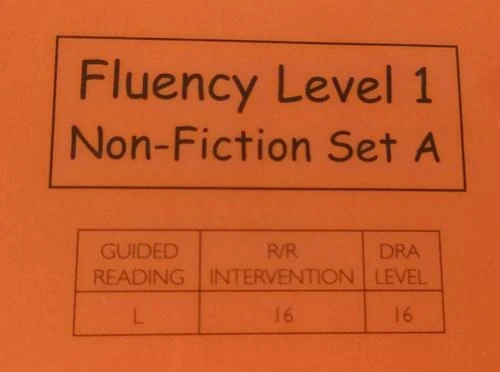
The library plays a huge role in their learning. For reading, the teacher borrows books from the library tailored to each student’s level. Everyone has a small box with their assigned books. Each book has a reading level on the back. On average, kids Qian’s age should be at level 22. When Qian arrived, he started at level 1 — basically “this is an apple, that is a pen” — and within a year, he reached level 16. That’s fast progress. Additionally, the teacher provides targeted exercises. For example, Qian still speaks English with a Chinese mindset — he speaks fluently but lacks tense concepts like past and future. The teacher gives him books focusing on tenses. He also has trouble with certain English sounds typical of Chinglish — he pronounces “cow” like “call” and “flower” like “floor” — so the teacher finds books emphasising those sounds. This kind of targeted training would be hard to do with a standardised textbook.
Project-based learning is another approach uncommon in China. Each term, they do three presentations. The teacher suggests topics, then students research and organise on their own. You can see Qian’s progress. The first time, parents basically prepared the script for him to read. When classmates asked questions, he couldn’t understand and needed someone to translate — he answered in Chinese and it was translated back. By the last presentation — “Why Can We See the Moon” — he mostly researched online, designed a small experiment with a torch, recruited classmates as assistants, and answered questions without translation. I think this really helps develop independent thinking.
Since there’s only one teacher for about twenty-something students, the teacher can’t do everything. So peer learning is strongly encouraged. Qian told me that classmates often teach him reading (which explains his Kiwi accent). On Fridays, they test each other on spelling and check each other’s work. Qian also teaches other kids maths or acts as a translator for newly arrived students.
Sports are heavily emphasised. My first impression of the school was that they play football every day. Qian plays before school, during lunch, and sometimes after school too. And they play hard. Before coming here, I noted he had no scars — not like a boy. Within two months, he’d scraped his knees three times. I was a bit upset, but he said one kid in his class even played with a broken arm. They spend a lot of time outdoors. Combined with New Zealand’s strong sun — white people can’t tan, black people don’t care about tanning — Chinese kids here are generally much darker than those in China.
The school does swimming every Friday afternoon. Qian used to be afraid of water — back in China, he wouldn’t even let water touch his head in the shower. He’d only use a wet towel to wash his hair. Nothing I tried — threats or bribes — worked. Swimming pools were out of the question. After a year of playing in the water here, one day he came home saying he’d learned freestyle. I didn’t believe him. I took him to the pool and saw him swimming quite well. He’s already started teaching me.
Coming Up Next
- Is it true that immersing kids in an English environment makes them native speakers in a year or two — or even stop speaking Chinese?
- How do parent-teacher conferences work in NZ, compared to China’s where parents are treated like students?
- Do the booming tutoring and olympiad classes exist in New Zealand?
- With no exams, how do they assess students?
- What interesting stories come from having kids of different races, nationalities, and backgrounds in one primary school?
Stay tuned.