New Zealand's Election #1
New Zealand is a peculiar country. Normally, only citizens have the right to vote. Not here. No matter where you’re from, as long as you have residency and have lived in New Zealand for a year, you can vote in the general election. Even stranger: not voting is illegal. Get caught and you’re fined — NZ$100 for a first offence, then the penalty grows exponentially. Under imperialist coercion, as a Chinese person, I was forced to deeply participate in another country’s election.
Most Chinese people aren’t very interested in politics. Honestly, when the election notice arrived at home, I counted — I hadn’t lived here a full year yet. I breathed a sigh of relief. My wife wasn’t so “lucky.” After I repeatedly urged her, she finally registered to vote, mainly to avoid the fine. At the time, I thought: even though I barely understand New Zealand’s political system and don’t know the candidates’ platforms, as long as you don’t fine us, we’re experienced enough to tick boxes for complete strangers.
But as the election progressed — with media coverage and colleagues’ discussions — we gradually got drawn in. Now everything has settled. Looking back, for me, this election was more of an educational experience, slowly deepening my understanding of New Zealand’s political system. I also developed some thoughts of my own. This article is written from my personal perspective, documenting my experience and feelings during this election. It’s not an explanatory article — I won’t introduce NZ’s political system, just my own experience and feelings. I’ll try not to compare with other countries, to avoid hurting feelings. If you’re interested in NZ’s system, see this article: A New Immigrant’s Thoughts on the Election. In a nutshell: Labour is left-leaning, National is right-leaning. Left means too much government, right means too little.
Prelude
Before 30, I lived under the sunshine and rain of the People’s Congress system. Then I went to Hong Kong for four years of study, just in time for the SAR leadership election — Liang Zhenying vs Tang Yingnian. I experienced how a new Chief Executive is elected according to the Basic Law and the Electoral Law. But as a student visa holder, I had no right to vote. My impression: having or not having the right to vote really matters. Although a small minority in Hong Kong complain about the Basic Law, they still go through the motions. Street canvassing is a must. I remember encountering a candidate on my way to school. When he first saw me, he bowed 45 degrees, smiled, extended both hands, and offered me his pamphlet. I said honestly, “I’m a student. I don’t have the right to vote.” The guy immediately did a 180-degree turn, offering his smile, bow, and pamphlet to someone else, leaving me with only his back. As if to say: if you can’t vote, you’re nothing.
Before coming to New Zealand, I only knew it was a Commonwealth country with the Queen as head of state and a Prime Minister as the real power. That was about it. Here’s what I experienced during this election.
Election Debate
One morning at work, my boss said in the office: “There’s an election debate on campus next week. The moderator is my friend, Professor X from the business school. She’s worried no one will show up…” I recognised this tactic — it’s the same as rounding up an audience for lectures in China, which I did often. So I volunteered: “Don’t worry, boss. I’ll handle it. I’ll grab some students…” The boss replied, “Great that you want to go! Here’s a ticket. Sit up front — there’ll be live coverage…” He ran off, leaving me bewildered. Wasn’t I supposed to grab students, not be grabbed myself? No choice — I had to go.
Although I’d never experienced an election debate in person, I’d watched US presidential debates online. I mentally filled in the scene — it should be similar to the US. But when I arrived, I was shocked. So shabby. Just an ordinary lecture theatre. What puzzled me most: why were there ten chairs up front? Shouldn’t there be just the two main parties? Eventually, ten people filed in, one late. That’s when I learned New Zealand has over a dozen political parties — and these were just the major ones. Some of the more unusual parties — like the Cannabis Legalisation Party and the Internet Party — hadn’t even shown up.
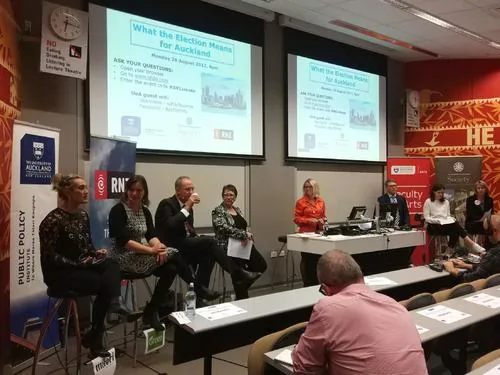
The debate: first question was about housing prices, second about environmental pollution. This felt oddly familiar — like we were on the same page as the motherland. Each party took turns speaking. Since only one was in government and nine were in opposition, it was a 1 vs 9 situation. But clearly, some parties were just there for attention — no real platform, just stirring up the crowd. I remember reading an article from the official Chinese media analysing why America’s political system inevitably leads to a two-party system. I agreed. But how does tiny New Zealand accommodate so many parties? Can the scattered minor parties have any real voice?
Jacinda Visits Campus
I first heard about Jacinda when one morning a colleague shouted, “F***! My Andrew Little is stepping down as Labour leader, and they’re putting an 80s-born young woman in charge. I’m heartbroken!” The “80s-born young woman” was Jacinda Ardern. She took over as Labour leader just months before the election.
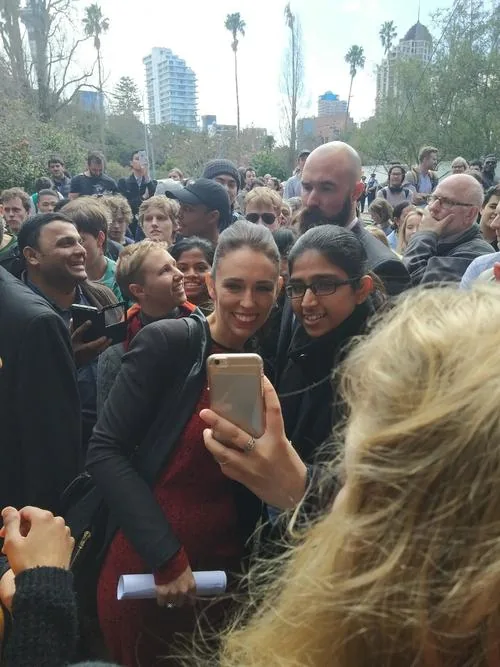
One day, I went to the cafeteria for lunch as usual. The normally quiet place was packed — walls of people. I thought some celebrity was visiting. I looked closer: a few burly bodyguards surrounded a beautiful woman, with students queuing for selfies. Definitely a celebrity. I was about to leave when she climbed onto a table, took a megaphone, and started speaking: “I’ll give you money. I’ll make university free. I’ll make New Zealand’s sky bluer and water cleaner.” I thought, who is this with such grand claims? The person next to me said, “That’s our future prime minister.”
That was my first encounter with Jacinda. My impression: incredibly charismatic — no wonder she was on the university debate team. And an Oscar-worthy performer. When a student told her, “I can’t afford tuition — I’ll have to drop out,” she immediately put on a sympathetic face. As the saying goes: “Our Jacinda — beautiful and bold.”
Chinese Participation
Chinese people in most parts of the world tend to keep their heads down and get rich quietly, with little interest in local politics. There are many reasons for this. I thought New Zealand would be the same, but this election changed my view on Chinese enthusiasm for politics.
First, participation. Perhaps because so many people had votes, many were quite engaged in the election — at least voting from their own interests. People with multiple properties worried about prices falling and voted National. Minimum-wage workers hoping for another increase voted Labour. Although most weren’t voting from civic duty or thinking about the country’s future, I think it’s commendable that they’re willing to speak up from their own perspective.
Thanks to high Chinese participation, candidates could no longer ignore Chinese voters. Before the election, many media outlets carried Chinese-language campaign ads. Watching YouTube — in the middle of a video — Jacinda would pop up with her buck teeth, urging me to vote for her.
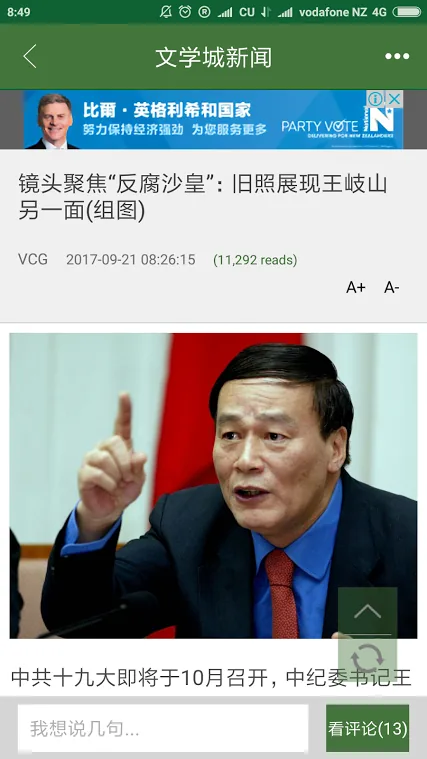
Many NZ-based WeChat public accounts, which usually only ran ads for houses, loans, and underground banks, also started carrying campaign ads during that period. I wonder if these WeChat campaign ads comply with China’s Advertising Law.

Beyond voting, many Chinese (who had been naturalised) actively ran for office. Most major parties had Chinese candidates — National’s Yang Jian, Labour’s Huo Jianqiang, People’s Party’s Yao Donglei, Māori Party’s Jiang Weide. See official Chinese media report: NZ Chinese Candidates Debate Party Policies
Of course, Chinese participation also saw some clashes between Chinese culture and local law. The notable ones all involved WeChat.
The Māori Party’s Jiang guy set up a WeChat group to rally support. In the heat of the moment, he sent a few red packets. Those red packets became evidence in court, because NZ law considers any form of payment as bribery. Jiang defended himself: “Chinese society values human relationships. WeChat red packets are an extension of physical red packets. The sender might just be following the festive tradition, and those grabbing might just be trying their luck.” Unfortunately, this light-hearted game doesn’t suit serious political elections.
Then there were attention-grabbing clickbait titles. Some people sharing news in WeChat groups continued the tradition of irresponsible, exaggerated headlines. Phrases like “the end of the party and the country” were common. When this reached Westerners, the media even reported it.
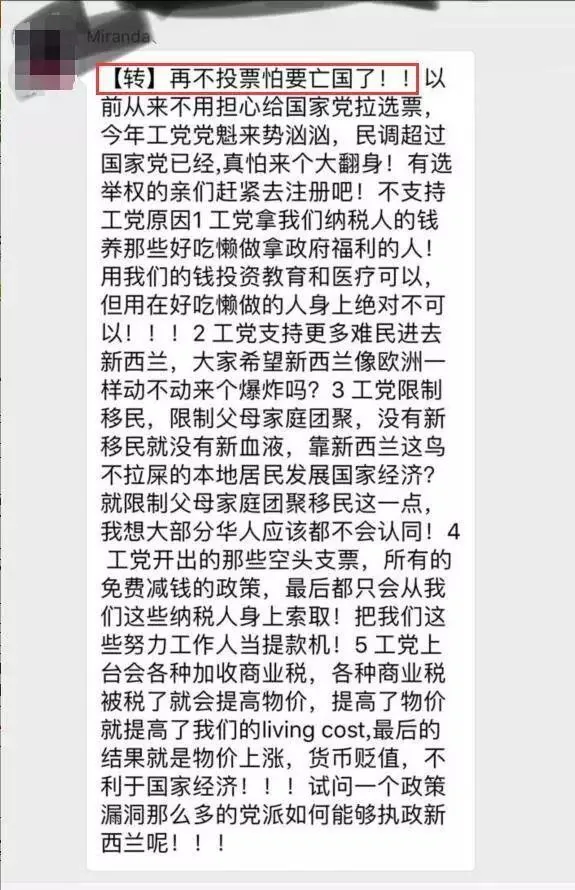
After the election, some wrote thoughtful articles reflecting on these phenomena.
Part 2 will include:
- Election night
- New Zealand’s unique MMP political system
Not sure if this can be published. We’ll see.