Being an Extra in New Zealand - Part 2
The villager audition was on a sunny afternoon. I drove to Kumeu Studios again. They were leveling a pasture to build a parking lot — clearly gearing up for something big. A tent was set up at the entrance; all villagers reported there. First thing inside: sign the NDA. Then we each received two things: a formal contract and a filming guide, both to take home and read carefully.
About 50 people were in the tent. Everyone was reserved at first. I was surprised to see children — later I learned they were from an after-school martial arts club. Since filming was on weekdays, they’d need to skip school for about two weeks. Kiwi parents are apparently much more relaxed about this than Chinese parents. But primary school in NZ is basically just play — no homework — so playing here or there makes little difference.
When everyone arrived, two assistant directors told us: “The audition is just looking at your faces. No experience or English needed. As long as you look Chinese, you pass.” Then they took charge of all filming-related matters. They reiterated confidentiality: no phones on set, no selfies (once in makeup, your image belongs to Disney), and no spoilers.
One incident stood out. A Chinese mother brought her mixed-race daughter to audition. The girl had blonde hair and distinct features — she spoke Mandarin but looked nothing like Chinese. The ADs rejected her. The mother was furious: “You’re racist! I’ll sue you!” In an immigrant country like NZ, accusing someone of racism is a serious charge — like accusing someone of violating party discipline in China. The AD calmly replied, “We’re not racist. Our requirement is ‘Chinese-looking.’ No matter your ethnicity, if you look Chinese, you’re in. Conversely, even if you’re born and raised Chinese, if you look too exotic, you’re out.” I’d heard about Chinese people facing discrimination, but this was the first time I saw foreigners discriminating against other foreigners for not looking Chinese enough.
The main event was touring the tulou (earthen building) village. You’ve seen it in the film — Mulan’s hometown. The crew built a massive three-story circular tulou at the studio. I’d never seen a real tulou in China, so I can’t compare, but the set was breathtaking. Given NZ’s construction speed, it must have cost millions and taken years. Surrounding the tulou were enormous trees, completely hiding it from outside.
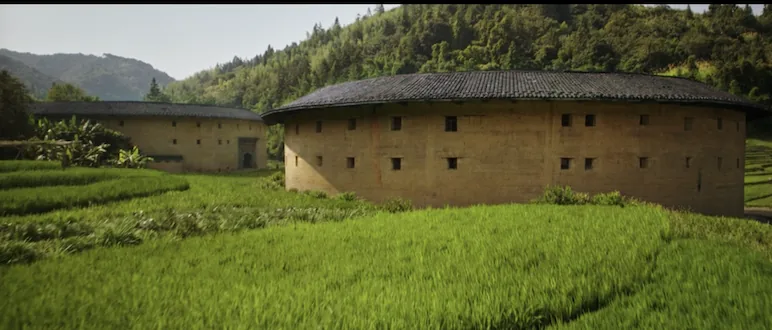
Figure 1. The tulou village. Only one was real; the other was a CGI copy. The farmland was also CGI.
Inside, the directors let us wander freely, with only safety warnings: stairs had no railings, the door on the top floor opened to nothing. After about 30 minutes exploring rooms, paths, stairs, stoves, plants, and animal pens, director Niki Caro appeared and said something touching: “We spent enormous time and effort designing and building this tulou, but it never felt alive. Not until you walked in did it come to life. Treat it as your own home — explore freely.”
Of course, finding anachronisms was easy. After the film’s release, netizens pointed out many. On set, we found even more: simplified Chinese characters appearing 1500 years early; chili peppers (from the New World via Columbus) appearing 1000 years early; yams from the Americas; limes nobody in modern China eats; Northern Dynasty Mulan using Southern Dynasty era names; electrically lit red lanterns; and the biggest: this southern-Chinese-style tulou is so far from the front lines that even driving a sports car, you couldn’t “leave at dawn and reach the Yellow River by dusk.” This is Disney’s Mulan, not the recitation-required Ballad of Mulan. Even in China, debate exists about whether Mulan was real. So historical accuracy is best taken lightly.
Makeup Test
Three days after visiting the tulou, we had makeup tests. I arrived early as the first batch. At a temporary studio, we each received three sets of clothing for three different film time periods (Mulan as a child, pre-conscription, and returning victorious). I asked the costume manager if these were designed specifically for this film or shared. “Purchased from China, specifically designed for this film.” But during filming, we noticed boots with Chinese characters reading “Ninth Prince” — clearly recycled from other productions. Maybe they were scammed by the Chinese supplier.
Makeup test had two parts: wardrobe and hair/makeup. Wardrobe was simple — strip to underwear, put on everything they gave you. Strict: one cold day someone wore thermal underwear, and the crew spotted a tiny collar peeking out. “Cut!” I’d never worn traditional Chinese clothing without buttons, where everything — shirt, pants, socks — was tied with strings. Never worn a hat that wrapped around your head twice. Two crew members had to help me get dressed.
Hair was fascinating. My hair was too short — ancient Chinese didn’t have crew cuts — so I needed a wig. A “360-degree” full wig. I thought putting on a wig was a one-second job. Far from it. First, clips in your hair. Then put on the wig, pin it to the clips. Finally, glue the wig to your head. Then style the wig and put on the hat. Once the hat was on, not much wig was visible anyway. Maybe big productions just have money to burn… The whole process took 1-2 hours, repeated every filming day. Removing the glue with alcohol was painful.
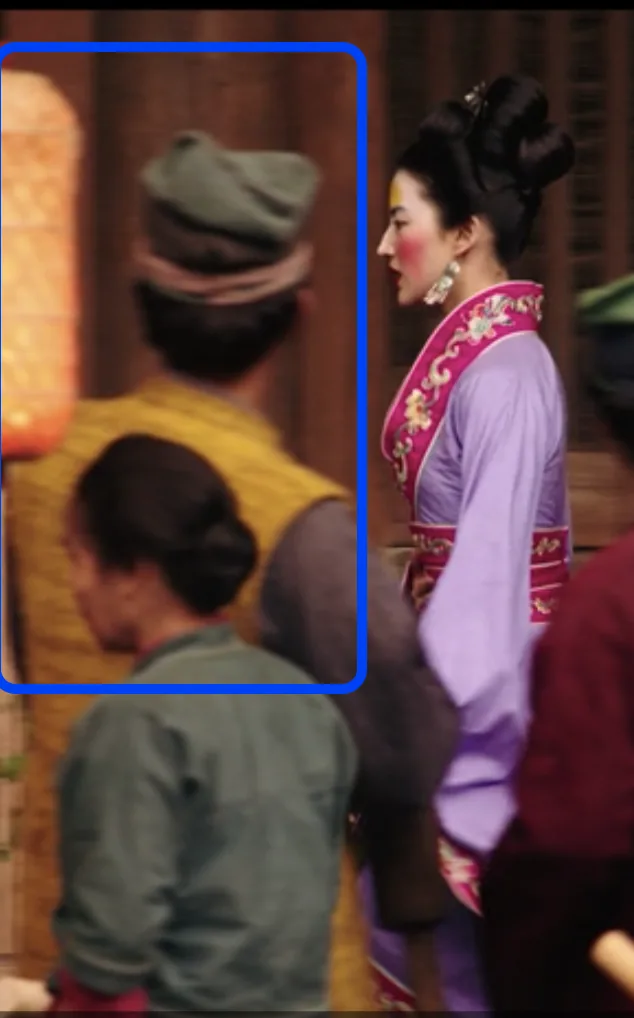
Figure 2. My wig in the matchmaking scene. Only my ears are real — everything else is costume. The 2-hour daily makeup was worth it — no obvious anachronisms.
Final step: dirtying. As villagers, we couldn’t be clean. Makeup artists rubbed “ash” on our hands and faces — actually makeup powder for Black actors. Then we lined up outside while someone threw giant powder puffs at our clean clothes. The guy dirtying me had lived in Beijing for 3 years and spoke decent Chinese. He said it was expensive, skin-safe makeup material. I’m sure rolling on the ground would’ve worked just as well.
Finally, we entered a studio with pure white background, blinding lights, and professional photographers shooting us from every angle. For the first time, I felt like an actor.
First Shoot
Two weeks later, shooting day arrived. The night before, a text: “Be on set at 7:15 AM.” Up at 6, drove to Kumeu. Some people were already in costume — they’d been divided into three batches (5:15, 7:15, 9:15) to stagger makeup. The 5 AM batch had been up since 3.
First: breakfast, then makeup. The morning shoot was young Mulan playing soccer (ultimately cut — those kid extras lost their scenes). Only the 5 AM batch worked; the rest waited in the tent. In the following days, waiting was most of the job. With phones confiscated, people returned to traditional pastimes: novels, chess, cards, handheld games, or chatting. Everyone agreed that without phones, bonds were stronger. Makes you wonder if social media truly connects or merely distracts.
By afternoon, it was our turn. Excited to enter the tulou, we shot the “Khan’s Conscription” scene — officials announcing war and drafting soldiers. As extras, we mostly watched. The drama was between Mulan’s father and the officials. First, they had us watch from the second floor. After a few rehearsals, we came down, were assigned positions and reactions, and told how to gather when the official’s horse arrived. First time seeing the stars playing Mulan’s family.
My first acting experience was straight out of Stephen Chow’s The King of Comedy opening scene. Before each take, two rehearsals. Then the director yelled “Cut!” and through a megaphone: “Please be professional! You’re acting in a movie, not watching one. The government official just told your village you’re at war. What does that mean? Bloodshed! Families torn apart! And you’re standing there with blank faces? That won’t work!”
Like a slap in the face. All excitement vanished. He was right. I’d been treating it like watching a movie. Common mistake for extras. We paused while two ADs literally taught us how to show surprise and grief without being melodramatic.
That’s when I realized acting is genuinely difficult. My wife says I’m always “acting” in life, mimicking movie scenes perfectly. But real acting? Totally different. A simple scene about reacting to war news requires real immersion. If there were enough extras, they’d have auditioned for this. But because they were desperate, people like me who can’t act slipped through.
The next two weeks of filming were fascinating. Meeting the Emperor’s guard, kneeling scenes, etc. But the first conscription scene left the deepest impression. The rest will be in B-roll.
My performance was faithfully captured. Looking back, it’s somewhat overacted. I remember wanting to do a hand-over-heart gesture but finding it too dramatic — my hand stopped halfway. That was recorded too. And my turning around — the director taught us to show terror by looking at each other. But when I turned, nobody was there to mirror me. That’s my first-ever film shot.